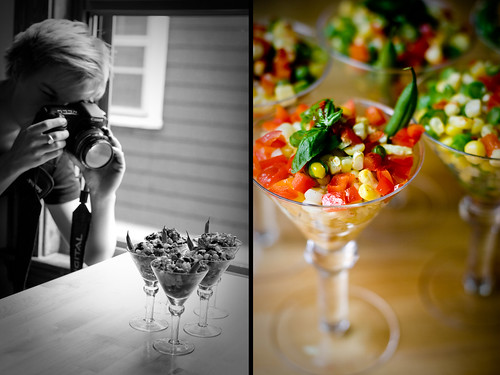
Marc Romanelli successfully capture the shares for more than twenty years. He is based out of Santa Fe, New Mexico, where he lives with his wife and baby daughter. Marc's images are processed by the Getty for images and movement, Corbis (motion), Creatas (motion), a Workbookstock, Hola, Blend, Bluemoon and Alamy photo.
John Marc, I know you are shooting stock for a long time ... and that is not currently shooting tasks. Can you meet us at the beginning of their career? How did you come to take stock of Archer
Marc: I started painting, drawing and design as a kid and it just picked up a camera at age 17. I started the recording of artefacts ... crushed cans, tree bark, rusted metal ... the world discovered that through the lens Nikkor 55mm Micro. Being up close to me was the discovery that follows a wide-angle lens that distorted the reality of the other beautiful ways.
I started shopping my portfolio around Manhattan and eventually bored Life Magazine in giving me some problems. You have the cover of modern photography at 23, then signed a picture for banks to 24 Early on he realized that freedom provides a limited way for me to go. I traveled to a very low budget, maintains very low overhead, while at home, and plowed profits back into travel mode.
About 20 years ago made the choice to concentrate on shooting people, getting people comfortable with the guidance in recreational shooting sports with the (then) recently moved to the mountains of western ... Santa Fe. It eventually grew into a record of life and whatever else struck my fancy, including some art stuff.
John: Do you license your shares only through a licensed agency, or both? What the agency to carry your work?
Marc: I do not license their own, and I represented the Getty for images and movement, Corbis (motion), Creatas (motion), a Workbookstock, Hola, Blend, Bluemoon and Alamy photo.
Ivan: RF, RM or Micro
Marc: I shoot RM and RF. I have not shot Micro and probably will in the future.
John: You can shoot motion, as well as photos. How long have you been shooting motion and how you happen to move into this field?
Marc: I first started recording the movement back in 1997. I call it the "second wave" image bank of guys who got their feet wet capture movement. I had an intuition that I'd be at it naturally. I have owned Arri 16S, Arri bl2 3mm, and is currently Camcorder Panasonic HVX200 (for sale cheap ).
John: Do you think you need a different skill set to record movements
Marc: Different skill set ... absolutely have to do with the movement of a bow in time, maybe 20-30 seconds and tell the story. You are responsible for moving the camera or objects in space and time, rather than relying on a decisive movement that crystallized in a single shot.
John: How do they fit into your future plans go
Marc: The proposal is part of the mine's operations, a more important dio.Tech rush shooter makes further acknowledge that the hybrid camera capable of recording motion pictures and 1080p files are here to ostanu.Svijet seen as the most moving, emotional and effective way to communicate.
John: As you approach the stock to shoot? That is, ideas, plans, casting, etc.
Marc: concentrating on what best to do seems to work (all in an unstable environment). The key that I try to use the question "does it feel real, authentic"? Easier said than done.
Especially now, as the visual experience must change the paradigm of the excess, expansion and self-centered focus ... reality, community, shared responsibility and contraction. I work very intuitively ... I cast friends and people I meet that I have a feeling about;. I rarely work with the model
I also do not shoot in the studio. My preference is to find the right place. This can present challenges, but I prefer the authentic feel of jobs.
Ivan: Are you involved in the fine art world
Marc:. I have dealt with the visual arts world, having a one-man show of my black and white personal work presented in Santa Fe and group shows, as well as
Ivan: What do you most satisfying about your work
Marc: I enjoy shooting my 3-year-old daughter. It keeps my chops razor sharp pictures, photo and my intuition on high alert ... try to capture vivid visual!
John: Anything else that you want to share
Marc: I think my decision to do a stock shoot sets matching talent to the place, while keeping an eye on how I could differentiate my image of what's out there
.
and have a tendency toward what I call "situational" shoots lifestyle shoots, which are based on reality, and subscribe to the idea that the end users of my paintings are essentially looking for elevating, inspirational, positive image. In fact, sometimes the most positive thing that comes out to shoot a relationship, interaction and communication with the talent that you have friends and acquaintances. It's like there is some sort of "charged, remains positive," which was created by the action happens photos. Usually, if an experienced I know I've done a good job of catching something.
industry is in flux. What do you see as the current major challenges for you as a stock shooter? How do you deal with these challenges?
Our business is evolving at warp speed and the engine is a digital revolution, a massive democratization also called "crowd sourcing", the availability of exceptional and affordable digital cameras now, and the new portals and sales platform creates a surplus, the saturation of images chasing fewer customers. This is especially true now, given our fragile economy.
What to do? I choose to shoot what I know, I shoot what feels right to modify the motion capture, as well as pictures, finding new agencies that wish to build their collection of work done faster by loading images, but not forgetting the "girl who led the dance" in the first place ... to be your bread and butter agencies. In my case it is the agency Getty.
John Marc, thanks for sharing that with us